
Recycling for the energy transition: Fossil fuel infrastructure provides raw materials for sustainable energy production
Dübendorf, 28.07.2026 — To transition from fossil fuels to renewable energy sources, we need to build new infrastructure. Empa researchers show that obsolete fossil fuel infrastructure – such as coal mines, oil and gas platforms, fossil fuel power plants, and pipelines – can provide some of the raw materials needed for the energy transition. In particular, recycling copper and steel would make the energy transition more cost-effective and environmentally friendly.
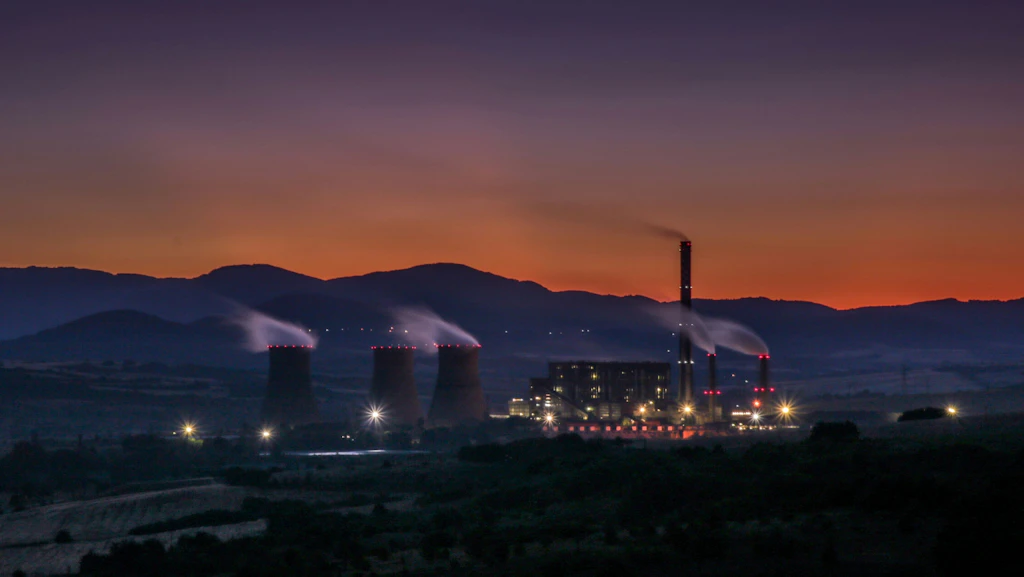
Moving away from oil and gas and toward solar, wind, and hydro power: That is the energy transition. To stop global warming, we must shift our energy infrastructure toward renewable sources in the coming years. The large-scale construction of solar cells and wind turbines requires, among other things, minerals and metals. At the same time, the existing fossil fuel infrastructure is becoming obsolete. So, could we recycle parts of our old energy system to build the new one? Researchers from Empa’s Technology and Society laboratory investigated this question in a study.
Their study was conducted as part of the EU project CircEUlar and was published in the journal Nature Communications. The researchers analyzed the stocks of 22 different materials contained in today’s coal mines, oil and gas platforms, fossil fuel power plants, and large pipelines. “To understand the potential of this ‘urban mine,’ we first need to know what materials are available in it,” says Empa researcher Hauke Schlesier, the study’s lead author.
Two raw materials stood out: steel and copper. Both metals are present in large quantities in fossil fuel infrastructure – and are urgently needed for the energy transition. “Copper is used in transformers and cables, while steel is used for structural elements,” says Schlesier. According to the study, recycling fossil fuel infrastructure could cover the entire steel demand and about one-third of the copper demand for the energy transition. As fossil fuel infrastructure is phased out, these additional material streams would become available for recycling. According to the researchers’ calculations, the capacities of global recycling facilities would be sufficient to recover the copper and steel needed for the energy transition.
More economical and environmentally friendly
But does recycling steel and copper from fossil fuel infrastructure really make sense? The researchers' answer to the question is “yes.” The recycling processes for both metals are significantly more environmentally friendly than their primary extraction. “Steel production generates slag, particulate matter, and large amounts of carbon dioxide, while copper mines produce toxic waste,” says Schlesier. Recycling, on the other hand, primarily requires electricity: Steel is melted down in electric furnaces, while copper can be recovered through an electrochemical process.
From a macroeconomic perspective, repurposing existing steel and copper stocks is highly beneficial. The researchers emphasize that it is worthwhile to begin recycling as early as possible, as this results in the lowest follow-on costs. The primary extraction of raw materials causes environmental and health damage, which entails significant follow-up costs for society (so-called externalized costs). “By recycling steel and copper from fossil fuel infrastructure, we could save between four and eleven trillion U.S. dollars in externalized costs by 2050,” says Schlesier. What's more, recycling itself is no more expensive than the primary extraction of steel and copper and is therefore quite competitive. “In addition, up to two billion tons of CO2 equivalents can be avoided. That corresponds to about 50 years of Swiss emissions,” adds Schlesier.
The main challenge for recycling valuable raw materials from fossil fuel infrastructure is the lack of incentives. “For state-owned fossil fuel companies, reducing societal costs could provide an incentive to phase out fossil fuel infrastructure sooner. This is less likely to apply to privately owned energy companies,” explains Schlesier. “They usually have no economic interest in minimizing externalized costs.” Further targeted incentives from the government could help address this.
Benefits for the energy transition
The recycled steel and copper could then be used worldwide in solar panels, wind turbines, power lines, or electrolysers for hydrogen production. “A promising approach is to use recycled steel instead of aluminum in the mounting systems for solar panels,” says Empa researcher Harald Desing, who co-authored the study. This could reduce the carbon footprint of solar panels by about a third. The amount of steel in the fossil-fuel infrastructure would be sufficient to provide two to five times the amount needed to meet global climate targets for solar power systems.
Recycled steel and copper could also be used in wind turbines. This would likewise reduce the carbon footprint of wind turbines by about a third. If the recycled steel were used exclusively for the construction of wind turbines, it could cover the total steel demand required to meet climate targets through 2050. “It could also be used in power lines and electrolysers for hydrogen production,” says Schlesier. “The key point is that clean energy technologies must gradually replace fossil fuel infrastructure so that the embedded steel and copper can be reused.”
Literature
H Schlesier, G Guillén-Gosálbez, H Desing: Recycling fossil infrastructure for cleaner energy transitions; Nature Communications (2026); doi: 10.1038/s41467-026-70777-6
Earth Overshoot Day 2026
Earth Overshoot Day is the calculated point in the year where we begin to live beyond the planet's ecological means. This year the date falls on July 30. This dates represents a pattern of resource consumption that is not compatible with climate neutrality. Addressing this gap calls for innovation, long-term commitment and approaches, the effects of which often only become visible over time.
Here are some additional examples of how Empa contributes to this transformation. The goal: A system that does not exceed the planet's carrying capacity.
Mining the Atmosphere, a research initiative to redefine the role of the built environment in the climate system – by actively removing carbon from the atmosphere and embedding it into materials
ACHIEVE, a SWEET initiative to develop pathways for Switzerland's hard-to-abate emissions – from industry to biomass use to carbon capture and transport – and integrate them into a national decarbonization strategy.
Beyond Zero, a unit in the innovation building NEST that promotes promising CO2-reduced and CO2-negative innovations in the building sector and shows whether and how buildings can act as carbon sinks.
Further information
Hauke Schlesier
Technology and Society
Phone +41 58 765 73 43
hauke.schlesier@empa.ch
Dr. Harald Desing
Technology and Society
Phone +41 58 765 75 13
harald.desing@empa.ch