
Fair organs
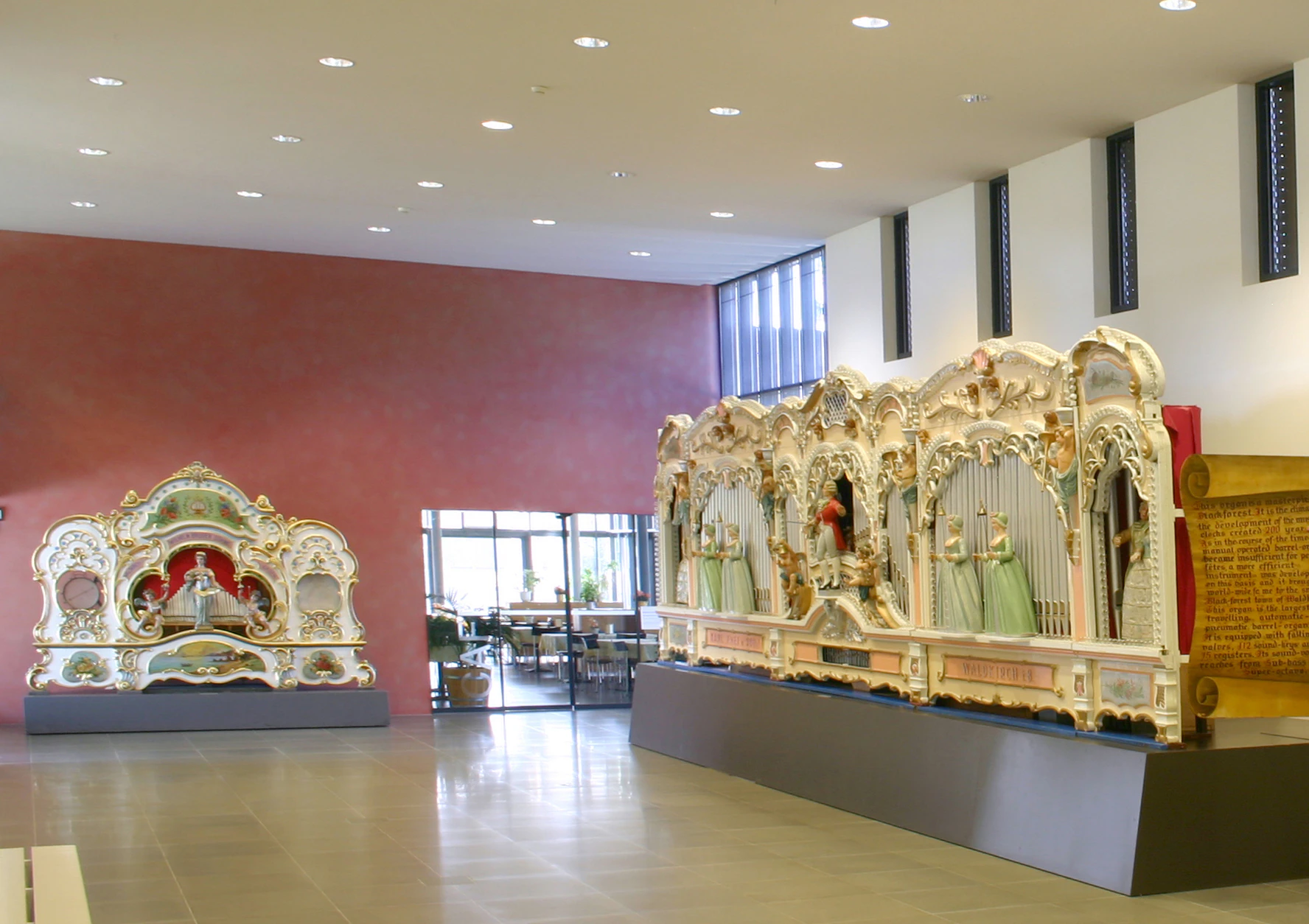
In the museum’s reception area are two fair organs to admire. Both come from southern Germany. Once praised as the "The largest travelling fair organ in the world”, the organ by the Karl Frei and Son company (112 tracks) was built in Waldkirch, near Freiburg in Breisgau in 1949 and then remodeled by Karl Frei Junior in 1949 as the largest travelling organ in the world at the time. It achieves a span of some 12 meter with its swiveling wings and weighs around 6 tons. The organ with some 650 pipes was owned by the showman Zierer in Munich until he sold it to the Conklin Show in Toronto in 1969. The organ toured successfully throughout the American continent and was part of a large travelling fair. A large part of the show was sold in 1981 due to financial difficulties and the organ returned to Europe and Seewen to the museum. The second, somewhat smaller fair organ is an instrument from the turn of the 20th century (organ number 3546) by the Wilhelm Bruder Sons company, also located in Waldkirch near Freiburg in the Breisgau. The organ (62 track) was purchased in 1958 in Vienna for the collection of the Museum for Music Automatons.
Frei fair organ
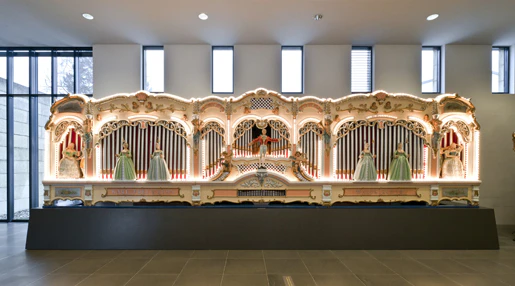
During the golden age of barrel organs in the period between the two world wars, Karl Frei (1884-1967) defined barrel organ manufacture in the Netherlands. He had already received lessons in harmony and counterpoint at the State music school in Waldkirch at the early age of nine. He completed an apprenticeship with the Wilhelm Bruder Sons in Waldkirch and with Ludovico Gavioli in Paris. He also worked, however, for the Belgium organ builders Mortier and De Vreese. He settled down in the Dutch town of Breda after the First World War where is established his own company. After 1945, he was forced to move his operations, which now included his son Karl Junior, to Waldkirch.
Bruder fair organ
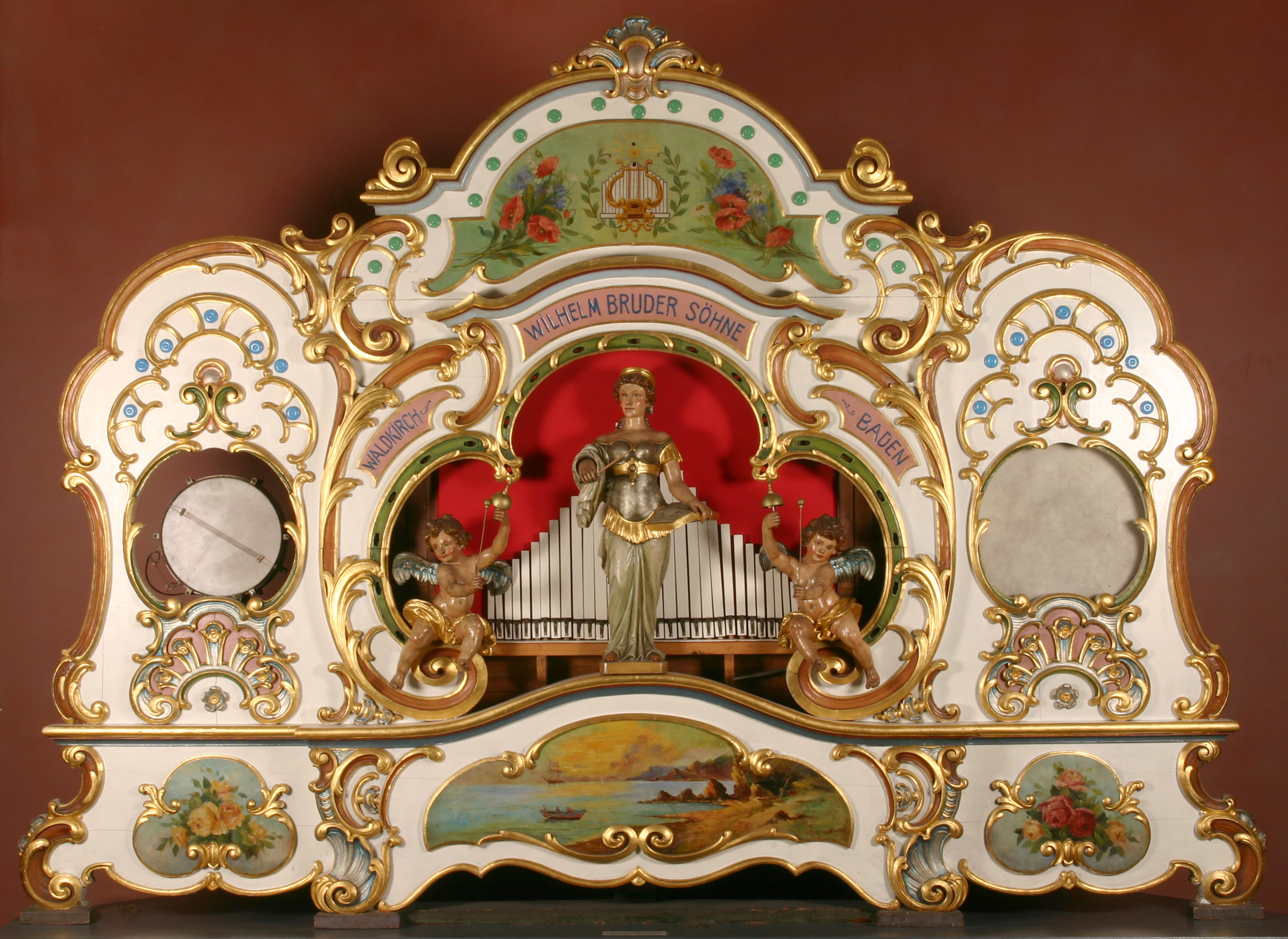
Ignaz Bruder was the founder of organ building in Waldkirch. He most likely was introduced to organ building in Mirecourt in the Vosges mountains. Four of his sons established the company "Bruder Brothers": Andreas, Ignaz II, Xaver and Wilhelm. Two sons of Wilhelm, Wilhelm II (1841-1893) and Arnold (1842-1918) established the organ factory "Wilhem Bruder Sons", which was subsequently managed by their children and grandchildren. Two sons of Ignaz II built organs under the company name "Ignaz Bruder Sons".