40 years, 4 themes, one exhibition and visions of the future
Anniversary exhibition from March 26, 2019 to March 1, 2020
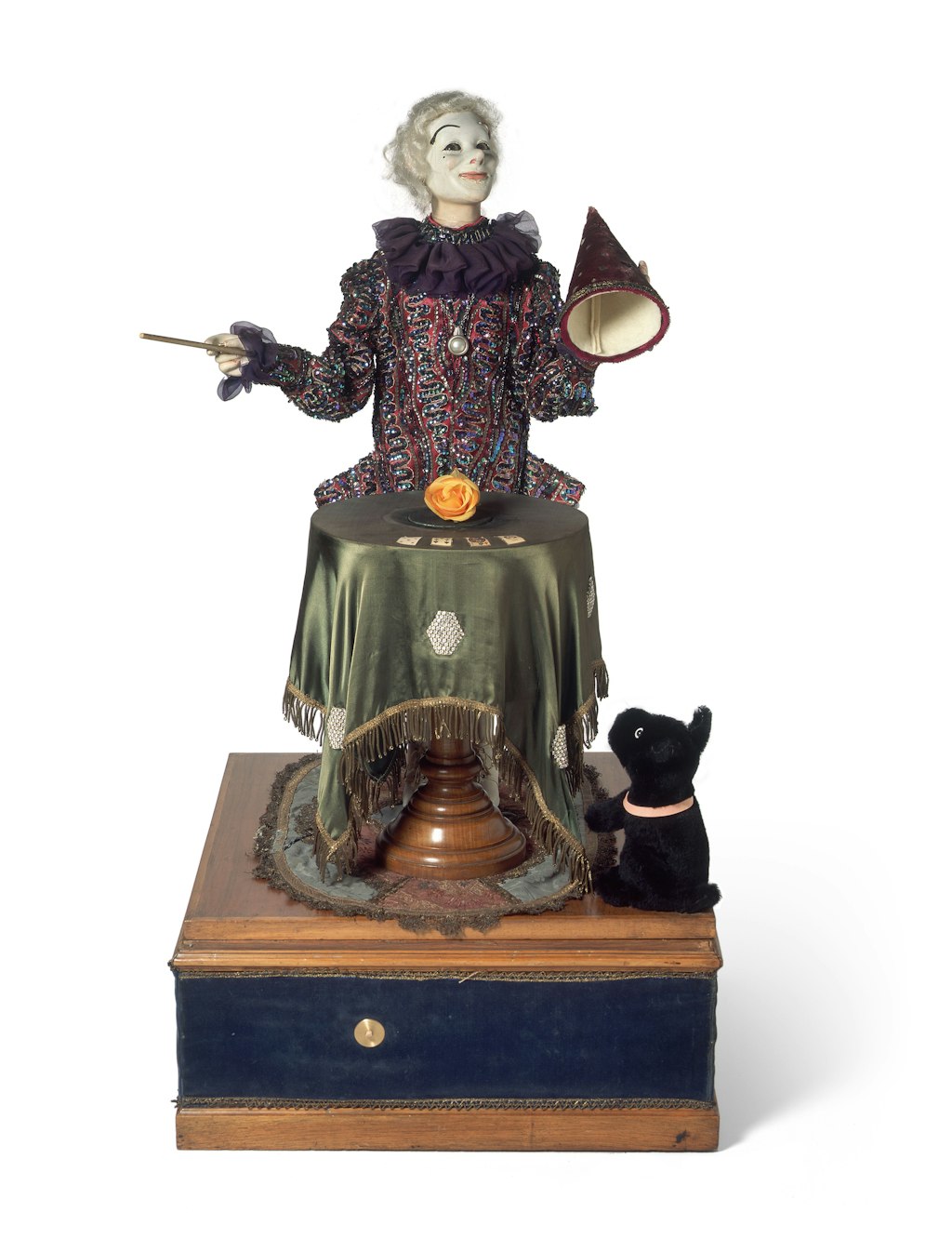
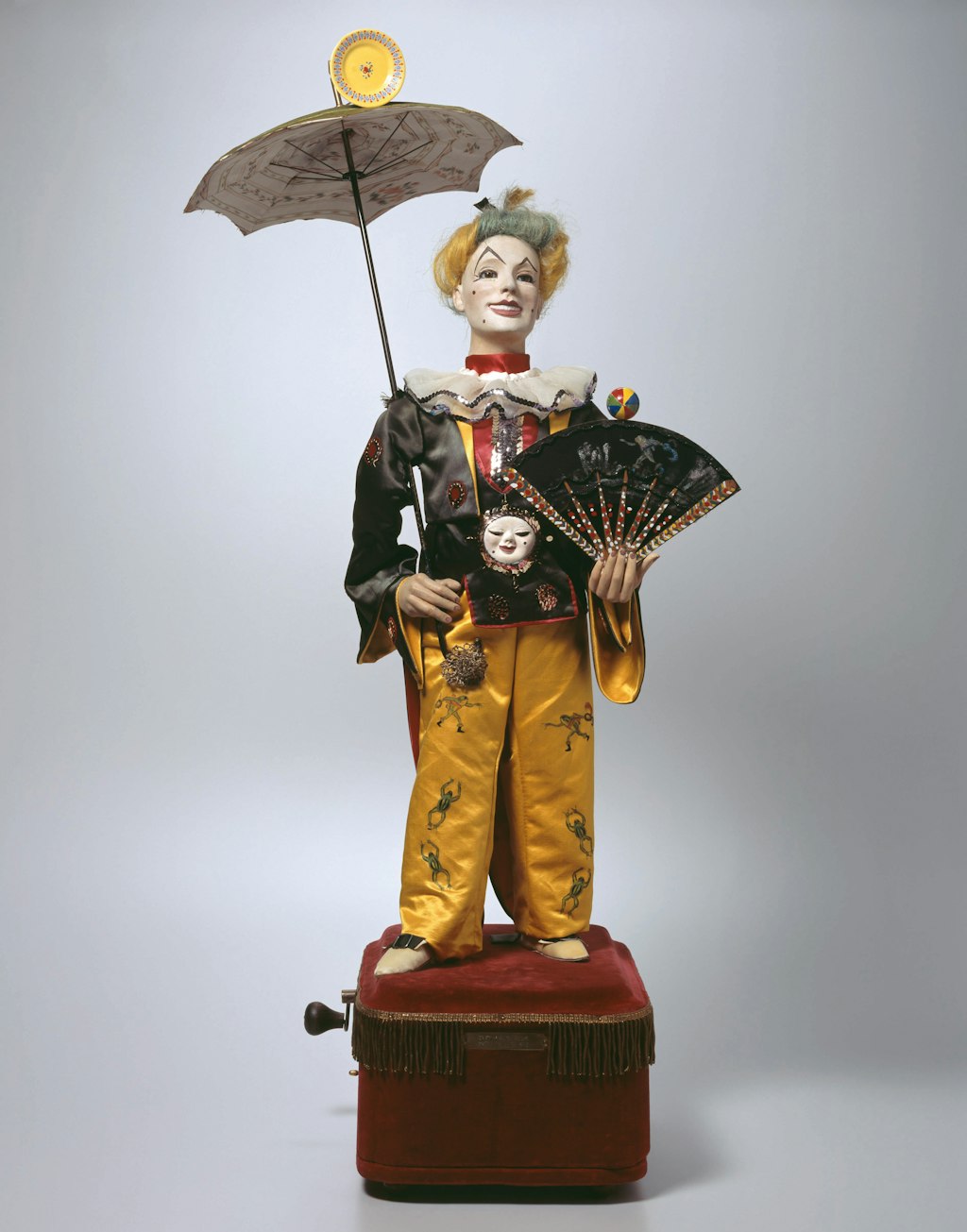
Figurenautomat Magier
April 1979 saw the opening of the Museum of Music Automatons founded by Dr. h.c. Heinrich Weiss-Stauffacher. Initially run as a private museum, it became a state institution in 1990 when the founder donated it to the Swiss Confederation.
To mark its anniversary, the museum in Seewen, Canton Solothurn, is presenting four thematic focuses under the heading "Automaton Music 4.0", each theme being presented in turn over the course of the exhibition. Automatons, cylinder music boxes, musical souvenirs and finally Swiss railway station music boxes offer a retrospective of forty years of collecting and mediation.
The museum will, of course, continue to offer visitors fascinating live demonstrations of its music automatons during the daily guided tours. However, the name of the anniversary exhibition - by analogy with "Industry 4.0" (i.e. the fourth industrial revolution) - suggests that some content in the Museum of Music Automatons will in future be presented via new media - not least in the newly designed ballroom, due to reopen in autumn 2019. That said, a visit to the "melodic museum" will continue to offer a combination of traditional museum experience with a unique musical dimension.
Please note that pictures may only be used for reporting purposes and must be published with reference to the copyright “Museum of Music Automatons Seewen SO” and that we must be provided with a copy of any such publication.
Press images July 2019
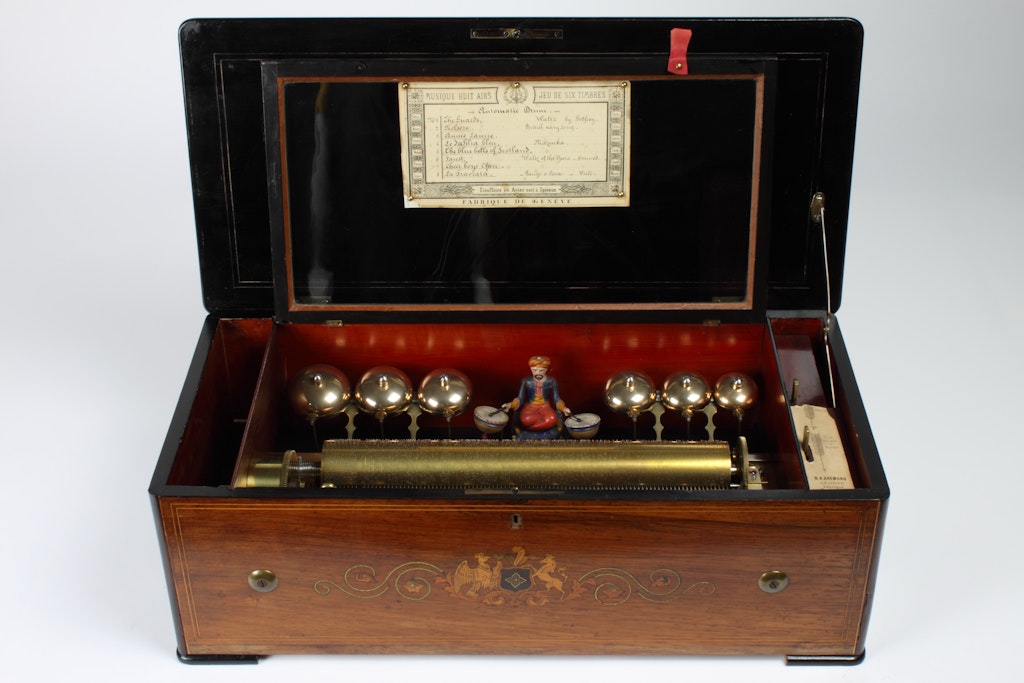
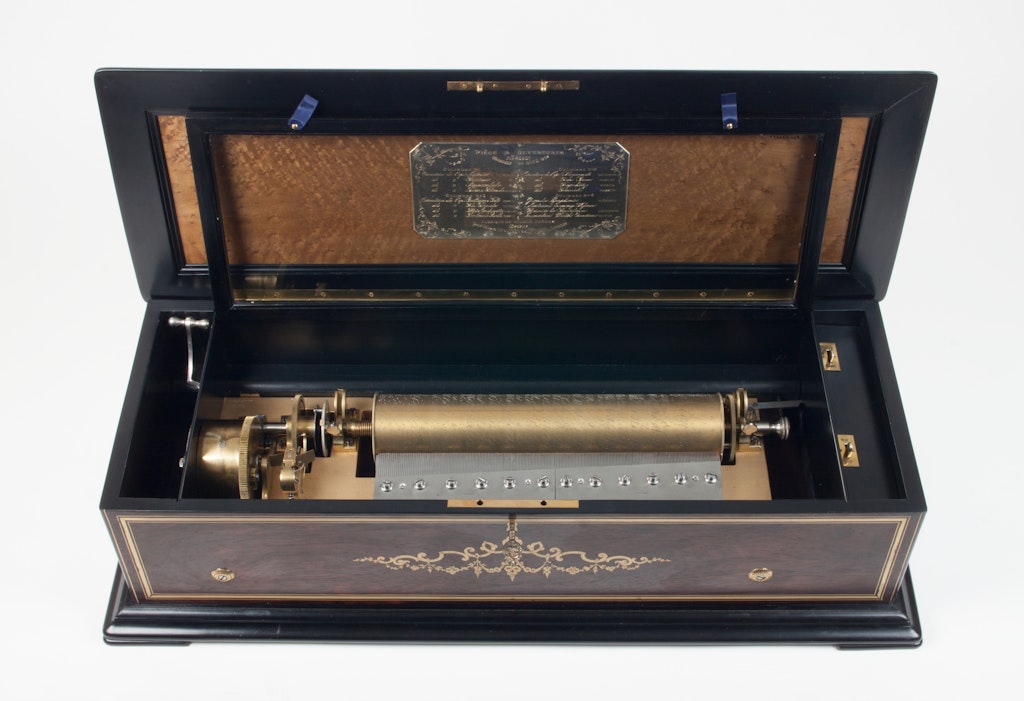
1 Musikdose «Automatic Drum». B.A. Brémond, Genf um 1865. — 8 Musikstücke; Kamm mit 85 Tönen; 6 Glocken, Trommel mit 8 Schlägeln.
Mit sichtbaren Glocken, versteckter Trommel und Figur.
61 x 31 x 21 cm (L. x T. x H.).
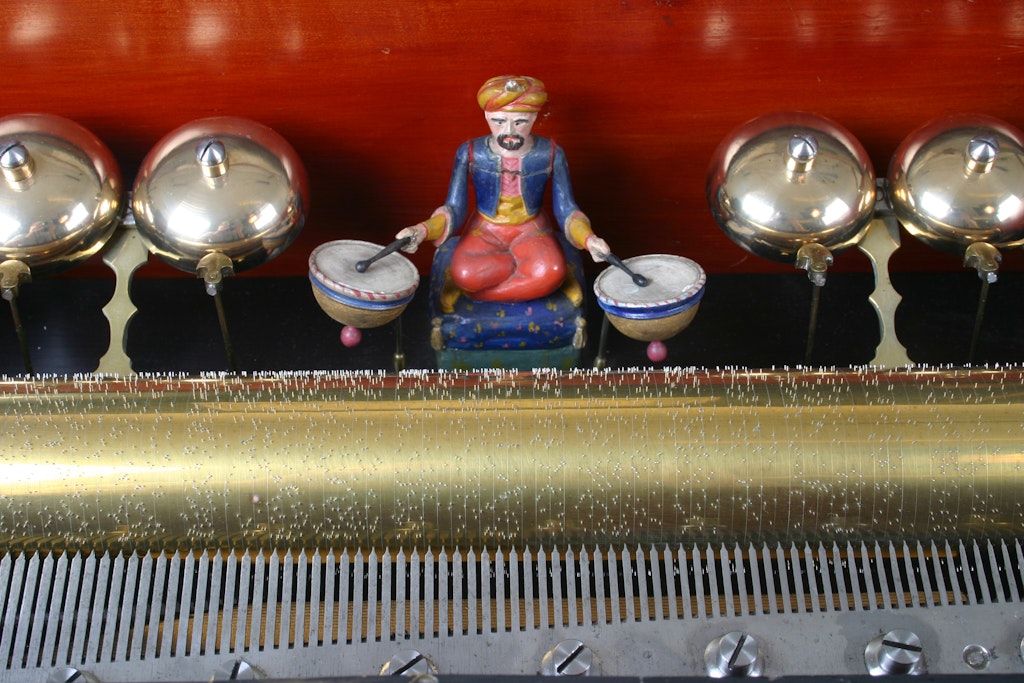
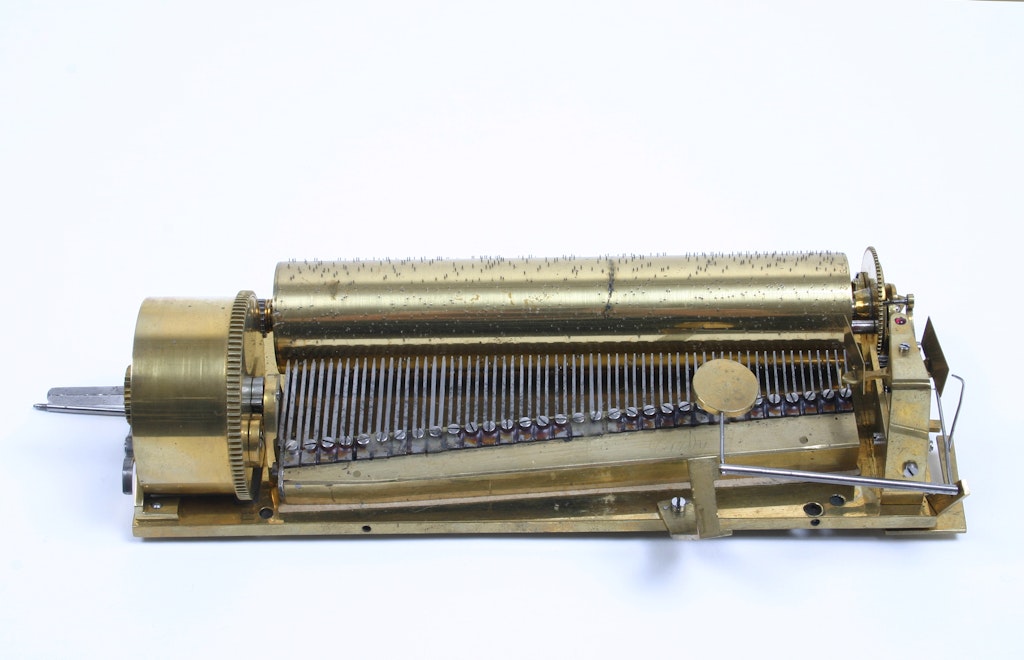
2 Detail der Musikdose «Automatic Drum». B.A. Brémond, Genf um 1865.
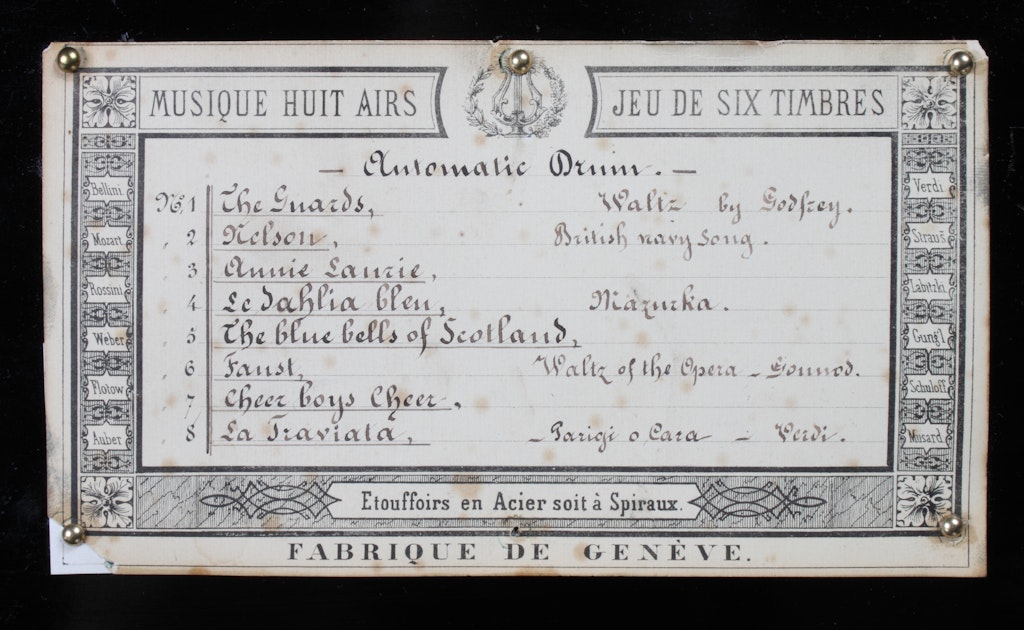
3 Programmblatt der Musikdose «Automatic Drum». B.A. Brémond, Genf um 1865.
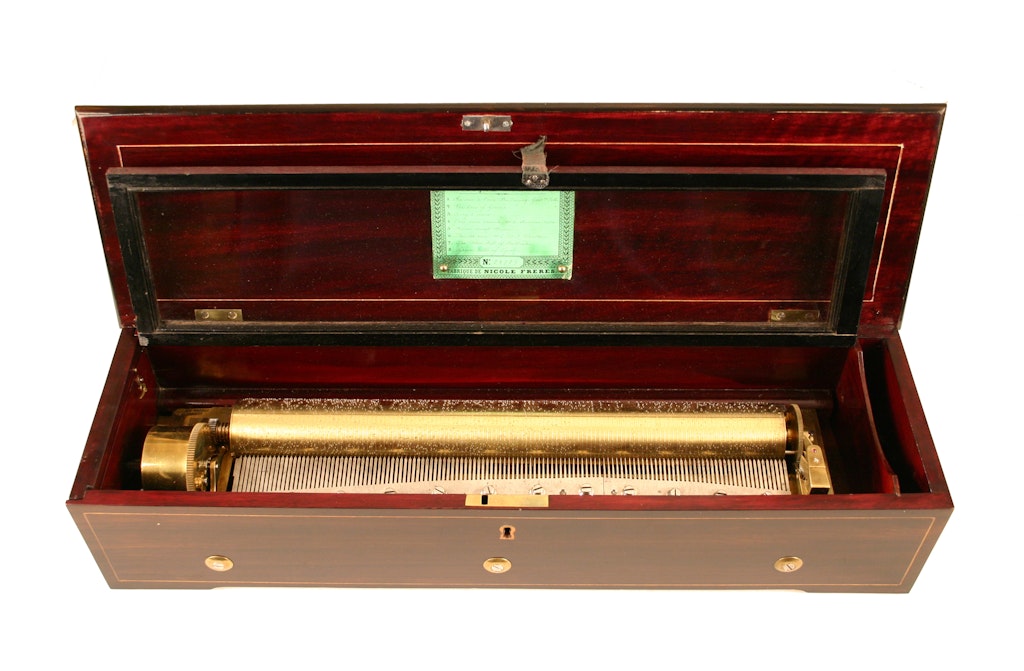
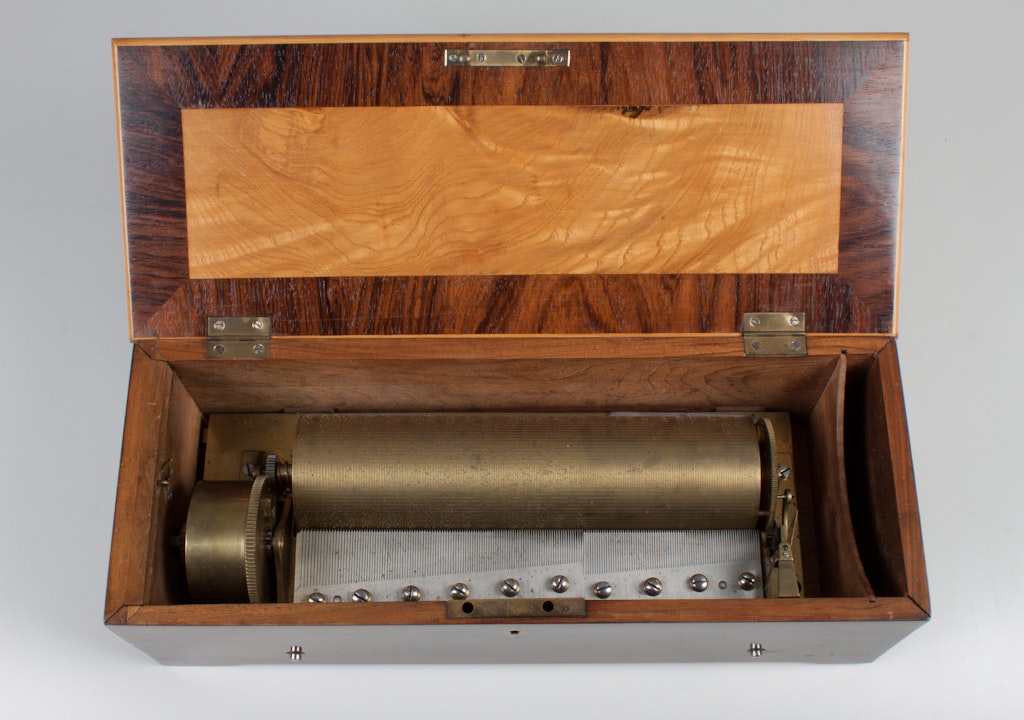
4 Musikdose «Forte-Piano». Nicole Frères, Genf um 1850. — 8 Musikstücke; 2 Kämme: Forte-Kamm mit 85 Tönen, Piano-Kamm mit 43 Tönen.
65 x 20 x 13,6 (31) cm (L. x T. x H., ( ) H. mit geöffnetem Deckel).
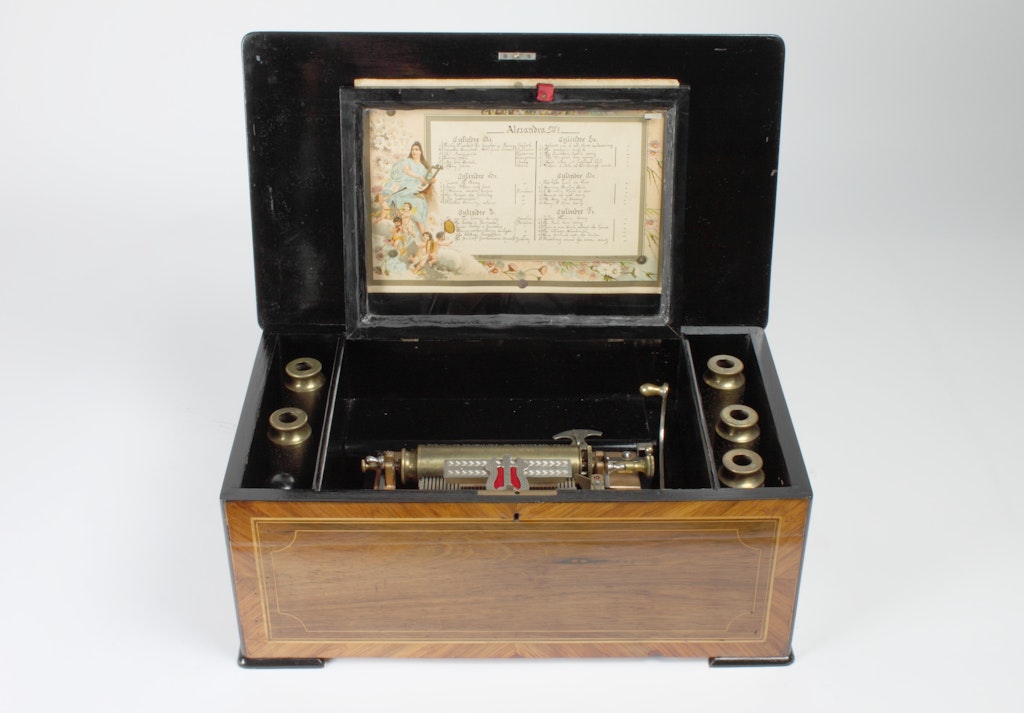
5 Musikdose «Alexandra No. 7». Alfred Junod, Ste-Croix um 1895. — Auswechselbare Zylinderhülsen mit je 6 Musikstücken; Stimmkamm mit 41 Tönen.
52 x 31 x 22 (48,5) cm (L. x T. x H., () H. mit geöffnetem Deckel).
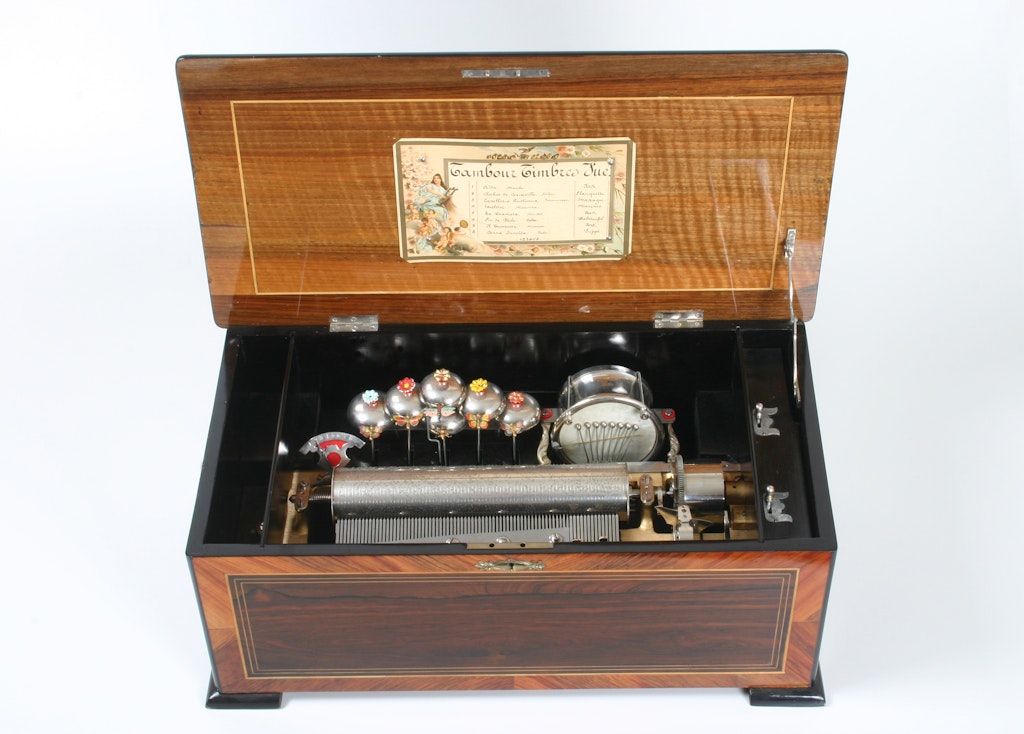
6 Musikdose «Tambour, Timbres en vue». Jules Cuendet, L’Auberson um 1895. — 8 Musikstücke; Stimmkamm mit 66 Tönen; 6 Glocken und Trommel mit 8 Schlegeln.
Das «Columbia»-Musikwerk wurde komplett von der Fa. Paillard & Cie., Ste-Croix, zugeliefert.
70 x 36 x 26 (56) cm (L. x T. x H., ( ) H. mit geöffnetem Deckel).
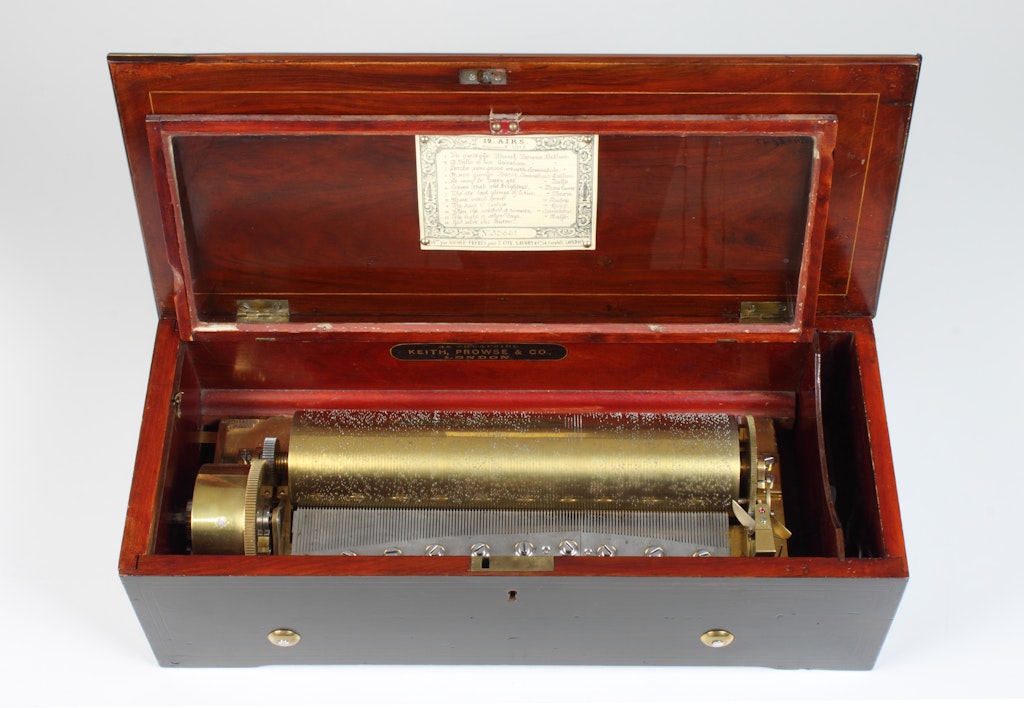
7 Musikdose «Forte-Piano». Nicole Frères, Genf um 1855. — 12 Musikstücke auf 6 Zylinderumgängen (two per turn); 2 Stimmkämme: Forte-Kamm mit 91 Tönen, Piano- Kamm mit 47 Tönen.
55 x 25 x 17 (37,5) cm (L. x T. x H., ( ) H. mit geöffnetem Deckel).
8 Musikdose «Rechange Ouvertures». Nicole Frères, Genf 1882. — 4 auswechselbare Zylinder mit je 4 Musikstücken (Ouvertüren); geteilter Stimmkamm mit 221 Tönen.
96 x 39 x 25 (56) cm (L. x T. x H., ( ) H. mit geöffnetem Deckel).
9 Musikdose «Forte-Piano». Hersteller unbekannt , Genf um 1835. — 3 Musikstücke; 2 Stimmkämme: Forte-Kamm mit 113 Tönen, Piano-Kamm mit 77 Tönen.
Die grafische Einteilung des Zylinderumfanges (Längslinien) deutet auf François Nicole als Hersteller hin.
42,5 x 19 x 13,5 (28) cm (L. x T. x H., ( ) H. mit geöffnetem Deckel).
10 Grosse Musikdose «Sublime Harmonie Trémolo» auf Kommode. Paillard & Cie., Ste-Croix um 1900. — 12 auswechselbare Zylinder mit je 6 Musikstücken; 3 Tonkämme mit 39, 49 und 39 Tönen;
Zither-Aufsatz.
168 x 73 x 110 (153) cm (L. x T. x H., ( ) H. mit geöffnetem Deckel).
11 Musikwerk für Uhrensockel («Cartel»). Hersteller unbekannt, vermutlich Genf um 1810-1815. — 4 Musikstücke; Stimmkamm aus 32 Einzelsegmenten zu je 2 Tönen.
20 x 8 x 5 cm (L. x T. x H.).
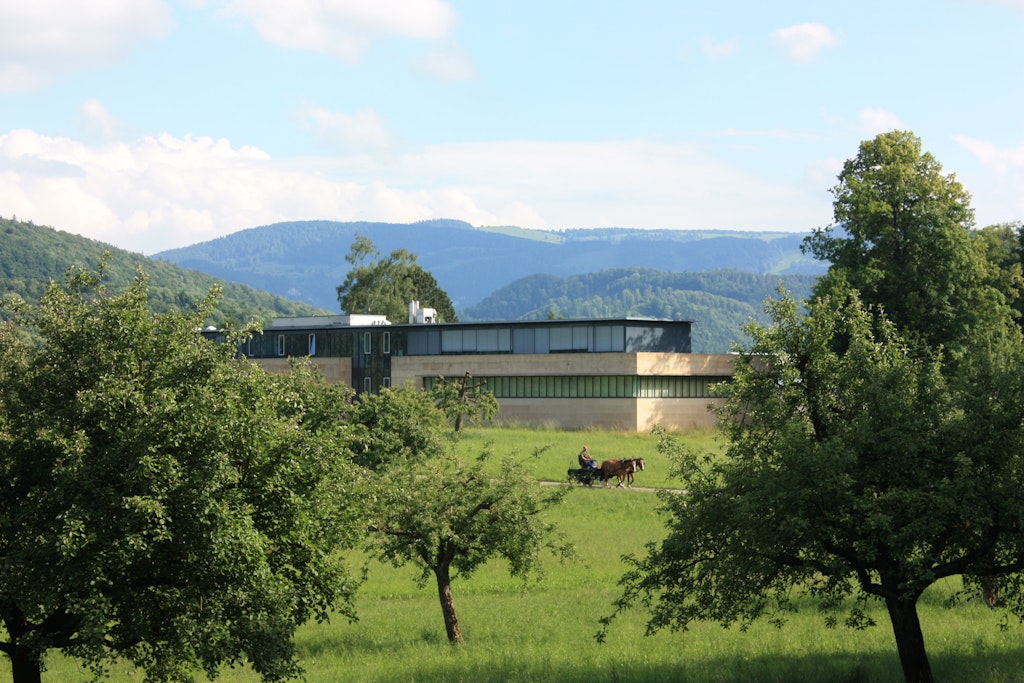
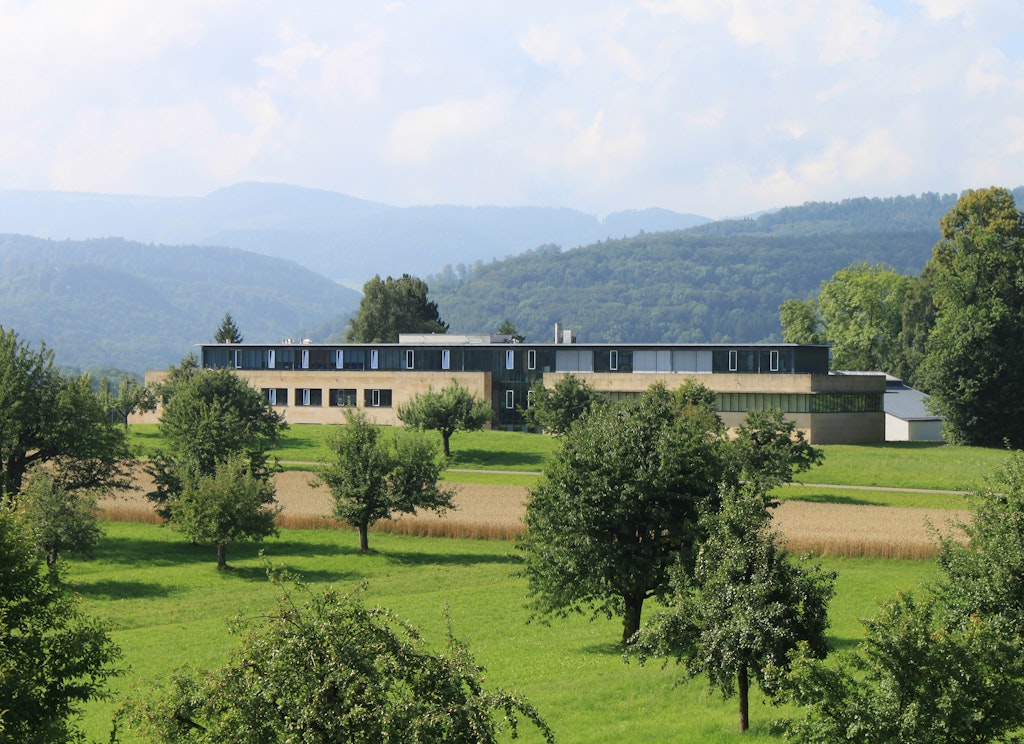
12 Die Nordfassade des Museums für Musikautomaten im Sommer.